
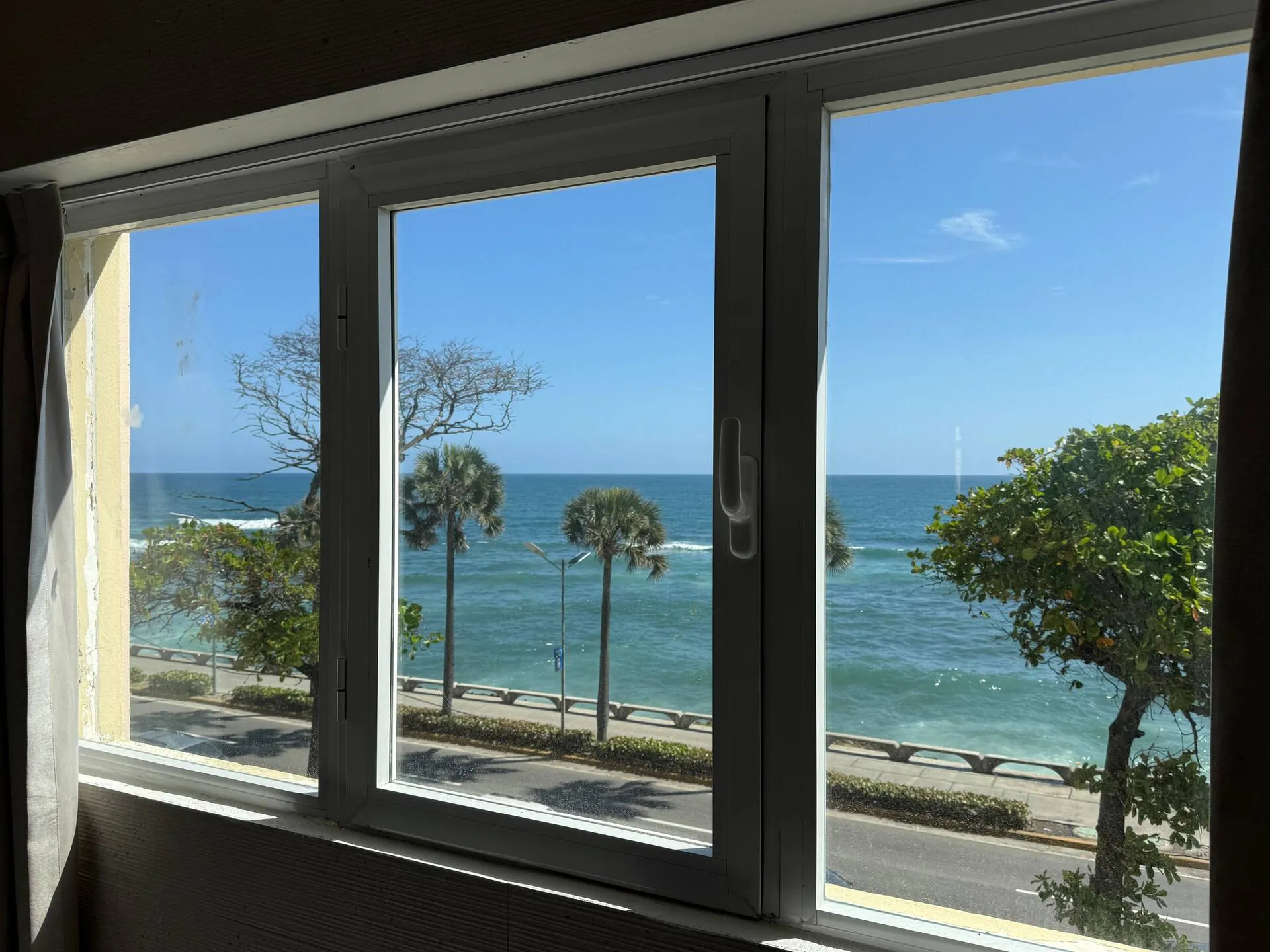
For a regular tourist trip, the paperwork for the Dominican Republic is short. You need a valid passport, a return or onward ticket, and the free electronic entry form called the e-Ticket, which you fill in online for the flight in and for the flight out. For most nationalities the tourist card is already paid inside the airfare, and it covers a stay of up to 30 days.
This page goes through each piece in the order you will meet it: the passport, the e-Ticket, the tourist card, visas by nationality, how long you can stay, what customs allows, health rules, children, pets and drones, and what happens on the way home. Rules change from time to time, so look at the official links at the end of the page a week or two before you fly.
If you are still choosing a flight, start with our pages on flights from the United States and flights from Canada, Europe and Latin America. If you have your ticket and want to know what happens after you land, read Las Américas airport to the Malecón.
The checklist
- A passport. The standard rule is six months of validity, with a temporary exception for many nationalities that runs through December 31, 2026.
- An e-Ticket for your arrival and for your departure, filled in at eticket.migracion.gob.do. It is free.
- A round-trip or onward ticket. Airlines check this before you board.
- The address where you are staying in the Dominican Republic. Ask us for the full address, with province, municipality and sector, before you fill in the e-Ticket.
- The tourist card, which costs US$10 and is included in air tickets issued outside the country.
- A visa only if your nationality requires one, or if your trip is for business, study or work.
Passport validity
The base rule for tourists is a passport with at least six months of validity. The same list of tourist requirements includes a ticket into and out of the country, an address in the Dominican Republic, and proof that you have enough money to cover your stay.
A temporary exception covers travelers from many countries. From December 1, 2024 to December 31, 2026, nationals of the European Union, the United Kingdom, Canada, the United States, Brazil, Chile, Argentina, Colombia and Ecuador who come only for tourism may enter with a passport that stays valid for the length of their stay and their departure. The exception does not apply to Dominican citizens traveling on a Dominican passport.
The Canadian and British travel pages describe the same exception, and Canada's page adds a useful reminder: an airline can apply a stricter rule at check-in than the destination country does. If your passport is close to expiring, renew it before you book. For trips after December 31, 2026, plan on the six-month rule unless the Dominican government announces an extension.
Cuban nationals who live legally in the United States have their own rule. Arriving from the United States as tourists, they may enter with a Cuban passport that expired no more than 24 months earlier, as long as they carry their Permanent Resident Card. That measure has been in force since June 1, 2023, with no end date.
One more passport point applies to everyone: a passport you have reported lost or stolen will be refused at the border, even if you later found it. Travel on a valid passport that has never been reported missing.
The e-Ticket
The e-Ticket is the Dominican Republic's electronic entry and exit form. One form serves three agencies at once: the General Directorate of Migration, the General Directorate of Customs and the Ministry of Public Health. Every passenger has to complete it, and the information has to be accurate.
The official address is eticket.migracion.gob.do, and the service is free there. You never need to pay a website or an agent to fill it in for you.
When to fill it in
There is no longer a 72-hour window. You can complete the e-Ticket as soon as you have your flight details, even months ahead, but it has to be done before you reach the airline counter, because the airline asks to see it. The airport gives the same instruction: finish it before check-in.
What you need at hand
Have your passport, your flight numbers and dates, and your address in the country. If you are staying with us, ask for the complete address with province, municipality and sector, which is what the form expects from guests in vacation rentals. If your home city does not appear in the form's list, choose the nearest large city in your state or province.
When you start, the portal gives you an application code. Save it. With that code you can open your form again, check it and change it. When you finish, the portal produces a ticket with a QR code that you can save as a PDF.
Check the passport number twice before you submit, so the form matches the passport you hand the officer.
Families and groups
One person can fill in the form for the whole family. The form takes the person filling it in plus up to six more, so seven travelers per form, and the family gets a single QR code. A group of more than seven needs a second form. Children do not fill in the customs section; the customs declaration is only for adults 18 and over.
Changes and mistakes
You can change an e-Ticket up to one day before the flight date on the form. If you can no longer change it, create a new one; only the most recent e-Ticket is validated. Travelers can be added to an existing form through the same change option.
Arrival and departure
You need an e-Ticket in both directions. Print or screenshot the QR codes for arrival and for departure, and keep them on your phone. Passengers on private flights, non-commercial boats, ferries and cruise ships are the exception: they use the physical customs and embarkation forms instead.
The tourist card
The tourist card, the Tarjeta de Turista, is a tax under Law 199-67. It is what lets a visitor enter for tourism without a consular visa. It costs US$10, covers a single entry and allows a stay of up to 30 days.
You almost certainly paid it already. Since April 25, 2018, the tourist card has been included in every air ticket issued outside the Dominican Republic, so air travelers do not buy anything at the airport. Travelers who arrive by sea or by land buy it at the tax office's points of sale at the port or border.
A few practical details: children need a tourist card whatever their age, which is again covered inside their ticket; the card is only for entering, not for leaving; and it can be used only once. The e-Ticket does not replace the tourist card. The two are separate, and you need both.
You do not need a tourist card if you are a Dominican citizen, a foreign resident of the Dominican Republic, or the holder of a valid Dominican visa.
Visa rules by nationality
The Ministry of Foreign Affairs, known as MIREX, runs an online lookup where you choose your nationality, passport type and visa type. For tourist travel on an ordinary passport, here is what it shows for the nationalities we host most often.
No visa is required for tourism for nationals of the United States, Canada, the United Kingdom, Spain, France, Germany, Italy, the Netherlands, Belgium, Switzerland, Portugal, Ireland, Mexico, Colombia, Panama, Peru, Ecuador, Brazil, Argentina, Chile, Costa Rica, Guatemala, El Salvador, Honduras, Nicaragua, Bolivia, Paraguay, Uruguay, Jamaica, Japan, South Korea, Australia, Israel and Russia. These travelers enter on the tourist card.
A visa is required for nationals of Venezuela, Cuba, Haiti, China and India. For Venezuelans the requirement dates from December 16, 2019, under MIREX Resolution 006-2019.
There is an important exception for travelers who would otherwise need a visa. Under Decree 691-07 of December 18, 2007, a foreigner who holds permanent residence in, or a valid multiple-entry visa from, the United States, the Schengen area of the European Union, Canada or Great Britain can enter the Dominican Republic for tourism with a valid passport and a tourist card. The Ministry of Tourism describes the same rule for legal residents of those places.
If your nationality is not on these lists, run the MIREX lookup yourself before you buy a ticket. It takes a minute and shows the consulate that handles your country.
Business, study and work
The tourist card is for tourism. Visitors coming for business or study should apply for the matching visa at a Dominican consulate abroad. The country issues tourist, business, work, student and residence visas, and tourist visas can be issued for one entry or several. To be issued any visa, your passport needs at least six months of validity.
How long you can stay
A tourist card allows a stay of up to 30 days, and the same limit applies to tourist visits without a visa.
If you want to stay longer, you have two options. The first is a stay extension, the prórroga de estadía, which you request online from the General Directorate of Migration. It extends a tourist stay past 30 days and up to 120 days. You upload a copy of the passport's photo page, your last entry stamp, your return boarding pass, proof that you can support yourself and a medical certificate. The request itself is free, it takes three working days to process, and you pay the rate for the extension online or at the airport.
The second option is to pay the stay fee when you leave. Migration publishes a sliding scale for foreigners who stay past their authorized time, and you can calculate and pay it online before your departure at stayfee.migracion.gob.do. The calculator asks for your passport number, the country that issued it, your date of birth and your departure date.
| Length of stay | Fee |
|---|---|
| 30 to 90 days | RD$3,500 |
| 3 to 9 months | RD$5,600 |
| 9 to 12 months | RD$7,000 |
| 12 to 18 months | RD$9,100 |
| 18 to 24 months | RD$11,200 |
Payment is online by Visa or Mastercard through the government's Sirite gateway, or in person at Banreservas with a payment code. You can also pay at the airport: the immigration section takes it after check-in and past security, on your way out. For a month-long stay, paying online the week before you fly home keeps the airport part quick.
Migration's office for extensions is on Autopista 30 de Mayo at the corner of Héroes de Luperón in Santo Domingo, phone 809-508-2555.
Return or onward ticket
Since April 28, 2023, airlines flying to the Dominican Republic must confirm before boarding that every foreign passenger has a round-trip air ticket. Dominican citizens and foreign residents are exempt. A foreign traveler without a return or onward ticket can be denied entry, and the airline can be sanctioned, so expect the check-in agent to ask.
If you are flying in on one airline and out on another, keep both confirmations on your phone. A one-way ticket with a separate booking for the way home is fine, as long as you can show the onward flight.
At the immigration desk
Officers of the General Directorate of Migration check your passport and your documents at Las Américas. They also take fingerprints and a photograph of each arriving visitor before admitting them.
Dominican citizens have a faster option. The airport's Autogates are open to Dominican passport holders over 18. Registration is free, is done once at a Migration office in the city or at the airport, and takes under five minutes; after that, the gates work on every trip. If you visit family often, register on your first trip and use the gates from then on.
What customs allows
Your clothes, toiletries, books, a phone and a laptop for your own use need no declaration. The customs service's traveler manual lists what an adult can bring without paying duty:
- Up to 5 liters of alcoholic drinks, such as wine, beer, rum or whisky.
- Tobacco, as one of these: 20 packs of cigarettes, 25 cigars or 200 grams of tobacco.
- Gifts worth up to US$500, an allowance you can use once every three months.
- One laptop and one tablet, new or used. A second laptop pays duty.
- Up to five toys for children.
- Sports and camping gear for your own use, such as golf clubs, a surfboard, diving gear or a bicycle, in normal quantities.
What to declare
Declare cash or bearer securities worth more than US$10,000, or the same value in pesos or another currency, both when you arrive and when you leave. Carry papers showing where the money came from. Customs does not tax money you carry; the rule is only about declaring it.
Declare food. Plants, farm products and medicines are regulated by the agriculture and public health ministries. Medicines for your own use are allowed, and controlled or psychotropic medicines need the prescription that justifies them during your stay. Drugs and firearms are prohibited.
Items you buy in airport, ship or plane duty-free shops are free of tax up to US$500 if you keep the receipts. The airport's customs office number is 1-809-549-9933.
Health requirements
Most visitors have no vaccination or testing requirement. Since April 23, 2022, no vaccination card or test has been needed to enter.
Yellow fever is the one exception, and it applies only to certain routes. Travelers arriving from the Brazilian states of Espírito Santo, Minas Gerais, Rio de Janeiro and São Paulo must show an international vaccination certificate dated at least 10 days before arrival. Children under 10 months, pregnant women and travelers who only changed planes there in under 12 hours are exempt. Since October 15, 2021, travelers aged one or older coming from Venezuela, or who were in Venezuela in the 14 days before arriving, must show a yellow fever vaccination card.
Traveling with children
For foreign children the rule is short: a foreign child needs only a passport, with exceptions when the child has a parent who lives in the Dominican Republic. For children flying alone, the airline sets the rules for unaccompanied minors, so ask when you book.
Children go on the family e-Ticket, without the customs section, and their tourist card is in their ticket. At the airport, every child needs a boarding pass, including a baby on a parent's lap, and every passenger goes through the X-ray screening; only babies pass with their parents. The airport suggests arriving at least three hours before a flight when you travel with children.
Dominican children and dual nationals
Dominican families who live in the United States, Spain or elsewhere often have children with Dominican nationality as well as another one. Migration publishes a step-by-step guide for these cases at permisosalidamenor.migracion.gob.do, and the rules depend on how long the child has been in the country and who the child travels with.
A Dominican child who also has another nationality or lives abroad, and who has been in the country less than six months since the last entry, does not need an exit permit. Carry the child's passport, the Dominican birth certificate (acta de nacimiento) and any visa the destination requires. If the child has been in the country more than six months, no permit is needed when the child leaves with both parents.
When a permit is needed, for example a child who has been in the country more than six months and is leaving with one parent, the parent who is not traveling signs a notarized power of attorney, legalized at the Procuraduría General de la República or a PuntoGOB office. The application, made online at servicios.migracion.gob.do, also asks for the birth certificate with its QR code, the parents' ID cards, passports and a recent 2x2 photo of the child.
The fee is RD$2,000 for one child and RD$1,500 for each additional sibling on the same document. A multiple-exit permit, good for one year with the same companion, costs RD$10,000. A single permit is valid for 90 days and can only be processed inside the Dominican Republic, so start it early in your visit. After you submit the application, you bring the originals to the office you chose after 24 working hours, and you get an email when the permit is ready, within 48 working hours, to download and print in color for the airport. The office is open Monday to Friday from 8:00 a.m. to 3:30 p.m., with longer hours in high season, and the phone number is (809) 508-2555.
Pets and drones
Call your airline first if you plan to bring a cat or dog, since airlines limit the number of pets per flight. Each animal needs a health certificate signed by a licensed veterinarian, showing an exam within 30 days before departure, no infectious disease, treatment for internal and external parasites and a rabies vaccination. The rabies certificate should show the vaccination date, the period of immunity, the product name and its serial number.
Drones are regulated by the Dominican Civil Aviation Institute, IDAC. Since April 2018, a drone under 4.4 pounds, or two kilograms, needs no permit. The Ministry of Tourism still suggests requesting IDAC's permission before you arrive, because customs at the airport tends to hold drones to charge duties, and a letter in hand makes that step easier.
Leaving the country
Your departure has its own short list. Have the departure QR code from your e-Ticket on your phone; if your plans changed, open the form with its application code and update it. The departure tax is US$20 and is already included in your airline ticket.
If you stayed more than 30 days, pay the stay fee online before your flight or at the immigration section after check-in and security. If you carry more than US$10,000 in cash, declare it on the way out as well as on the way in.
Plan to reach Las Américas three hours before an international flight. The airport is expanding, and long-term parking is limited while the work goes on, so allow extra time if you are returning a rental car or parking there.
Where to check before you fly
These are the official pages behind this guide. Each one is maintained by the government that sets the rule.
- Ministry of Tourism entry requirements: godominicanrepublic.com/travel/entry-requirements
- e-Ticket, free: eticket.migracion.gob.do
- Visa lookup by nationality: consultas.mirex.gob.do
- Tourist card: dgii.gov.do
- Stay extension and stay fee: migracion.gob.do and stayfee.migracion.gob.do
- Exit permits for Dominican minors: permisosalidamenor.migracion.gob.do
- Customs allowances: aduanas.gob.do
- Your own government's travel page, such as travel.gc.ca for Canadians or gov.uk for British travelers
When your documents are in order, the rest is the easy part: read how to get from the airport to the Malecón, or go back to the Flying in page for the airports and routes.
Once your paperwork is set, choose your ocean-view apartment on the Malecón.