

The Dominican Republic is the home of merengue and bachata, and both are on UNESCO's list of the intangible cultural heritage of humanity: merengue since 2016 and bachata since 2019. In Santo Domingo you can hear both live, in restaurants in the Colonial Zone and at open-air dance spots around the city.
From our apartments on the Malecón you can walk out along the water at sunset, eat at a nearby restaurant and go on to the city's nightlife without worrying about a ride. This guide covers how evenings work, where to hear live music, the Sunday dance in the ruins, theaters and concerts, the Malecón after dark, and the big nights of the year.
How evenings work
Evenings start late. Restaurants usually serve until 10 p.m. to midnight from Sunday to Thursday and until 2 a.m. on Friday and Saturday, so there is time for dinner before the music.
The Malecón comes to life at sunset and keeps going into the night, with residents out for the breeze, joggers and cyclists on the promenade. In the modern center, the bars and lounges of Piantini and Naco get busy from Wednesday on, with after-work crowds in the hotel bars along Avenida Winston Churchill and Avenida Gustavo Mejía Ricart.
Dominicans dress up to go out. Pack a couple of nice outfits for dinner and dancing; beachwear stays at the beach. Bring shoes you can dance in, since many of the city's dance spots are outdoors.
Spanish is the language of the dance floor, spoken fast, but English is widely spoken in the tourist areas, so you will find your way around a bar or a ticket office.
Merengue
Merengue is part of Dominican identity. It turns up in schools, family parties, public celebrations and even political campaigns, and people of every social class dance it together. Most Dominicans learn it as children by watching and joining in.
It is a couple's dance, with the pairs moving in circles around the floor. The classic sound comes from the accordion, the drum and the saxophone, and the north of the country is considered its cradle. From there it spread to Puerto Rico, the United States and the rest of the Caribbean, and it is popular in Venezuela, Colombia and Central America too.
The country celebrates National Merengue Day every November 26, set by presidential decree in 2005, and merengue festivals are held each year in cities including Santo Domingo and Puerto Plata.
In the Colonial Zone, Jalao on Parque Colón plays live merengue, bachata and perico ripiao while you eat. The restaurant calls its style 100% D'aquí, one hundred percent from here, and sets its dining room up as a little piece of the Dominican countryside, with painted houses and murals.
Bachata
Bachata blends the rhythmic bolero with Afro-Caribbean styles such as son, cha-cha-cha and merengue. The word itself probably comes from Africa and at first meant a lively party, not a kind of music.
A small group plays it: one or two guitars carrying the melody, now often electric, with bongos, maracas, güiro and bass, and one lead singer. It is a couple's dance with a simple eight-step pattern and a lot of hip movement.
Most Dominicans pick up bachata as children, but there are more than a hundred academies, studios and schools teaching it, so you can take a class during your stay.
Bachata grew up in the countryside and the poorer neighborhoods of the Dominican Republic in the 1960s, singing about everyday life, love and heartbreak to guitars and bongos. For years it was looked down on as music of the poor, until its feeling won over every social class.
José Manuel Calderón is known as the father of bachata. Juan Luis Guerra brought it to international stages with his album Bachata Rosa, and later Aventura, Prince Royce and Romeo Santos mixed in modern sounds and filled stadiums around the world.
Who to listen to before you come
A short playlist makes the music easier to follow when you hear it live:
- Bachata: José Manuel Calderón, Anthony Santos, Luis Vargas, Teodoro Reyes, Raulín Rodríguez, Frank Reyes, Héctor Acosta "El Torito," Zacarías Ferreira, Aventura, Romeo Santos and Prince Royce.
- Merengue and bachata together: Juan Luis Guerra and his band 4.40.
- Merengue for a party, including the traditional and típico styles: Kinito Méndez, Krisspy y el Bombazo Típico, Henry García and Fénix Ortiz, all names on the year-end merengue bills.
- Names from the big free concerts on the Malecón: Toño Rosario, Omega and Jandy Ventura closed the 2026 city carnival, and the merenguero Pochy Familia was on the New Year's Eve bill for 2025.
Son, the music of the Sunday dance
Son is the music of the Sunday dance in the ruins, along with salsa and merengue. Bonyé is also the nickname of a son legend, José María Guerrero, a sonero who with his wife, Inocencia Paredes, known as Chencha, formed the most famous son dance couple in the country, admired well beyond it.
The couple led the revival of son music and dancing in the Dominican Republic and gave rise to the Club Nacional de Soneros, created in 1986 as a place to dance and listen to son.
Sundays at the Ruinas de San Francisco
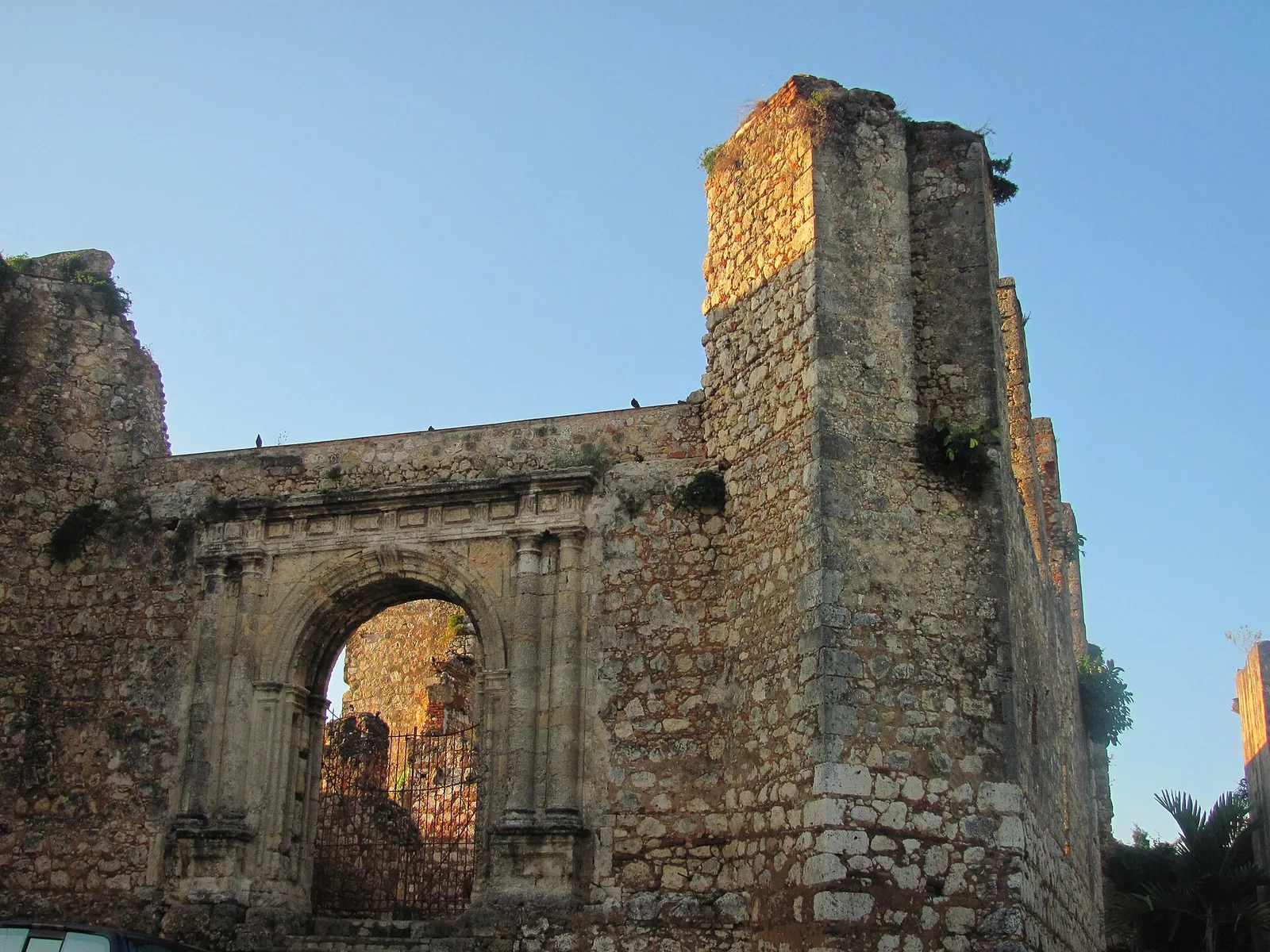
One of the most beloved musical traditions in the city happens outdoors. Every Sunday, Grupo Bonyé plays in the Ruinas de San Francisco, the ruins of the first monastery in the New World, in the Colonial Zone, and thousands of people come to dance son, salsa and merengue under the old stone walls.
Bonyé has been a Sunday tradition at the ruins since 2008. In July 2026 the music started at 5 p.m., and in earlier years the group played from 6 to 10 p.m. Before the pandemic pause it drew an average of 3,000 people each Sunday, and Bonyé has been declared a Bien Músico Cultural, a musical cultural asset, of Santo Domingo.
The group's members are Chino Méndez, Franklyn Soto, Félix Báez, Néstor Sánchez and Roberto Bobadilla. In 2026 the Sunday sessions were part of the Ministry of Tourism's summer program in the Colonial Zone, and the ruins appeared on the weekly culture listings through the summer.
Come early to get a spot near the band, wear shoes you can dance in, and have dinner beforehand at one of the restaurants on Parque Colón or the Plaza de España.
New places to dance
Santo Domingo has seen a return of open dance spots for merengue, bachata, son and salsa, and they draw both Dominicans and visitors:
- Chencha Espacio Abierto, named for Doña Chencha, on the Santo Domingo Este bank of the Ozama River facing the Colonial Zone, near the Puente Flotante and under the bicycle bridge. Francisco "Chino" Méndez leads it, with son, guaracha, merengue and boleros on a dance floor with a river view.
- El Corito Bachatero, a bachata gathering that began on August 6, 2023, because its founder felt the nightclubs had left no room to dance. It is aimed at Dominicans, and its founder says visitors like it because it was not made for tourists. It has met across from the Playa de Güibia on the Malecón.
- Los Carrandales, at the Disco Terraza El Grande in Manoguayabo, a bachata spot that tour groups now visit for its local atmosphere.
- Fineta Records, which curates music on vinyl and puts on parties mixing salsa, classic merengue and Dominican electronic music.
Live music in the Colonial Zone
Casa de Teatro, founded in 1974, is one of the country's most respected cultural centers. Its café bar hosts film nights and live music, its amphitheater stages plays and concerts, and its lobby shows art and photography. Poets, writers and actors have made it their meeting place for decades.
Every summer Casa de Teatro holds the Santo Domingo Jazz Festival on Thursday evenings in June and July. The 2026 edition was the 27th, with groups such as Vacío with María del Mar and the Frandy Sax Latin Quartet. The center also kept up its traditional film cycle and hosted concerts such as Joel Montero's.
The Plaza de España hosts major concerts, cultural shows and festivals in front of the Alcázar de Colón. Nearby, Parque Colón is one of the liveliest squares in the country, with merengue players, sidewalk cafés and plenty of people watching under the shade trees.
Summer brings the Ministry of Tourism's Turizoneando program. From June 20 to August 30, 2026, it filled the Colonial Zone with concerts in Parque Colón, rock nights at Las Mercedes on the Plaza Tirso de Molina, jazz evenings on the Escalinatas del Conde, folk music on Saturdays in Parque Pellerano Castro, stand-up comedy in Parque Duarte and museum nights until 9 p.m.
Our Colonial Zone guide has the streets and plazas, so you can find your way between them after dark.
Theater and concerts
The Teatro Nacional Eduardo Brito, open since 1973, is the country's leading arts venue. It stands in the Plaza de la Cultura among the city's museums, is named for a famous Dominican opera singer, and hosts plays, operas, the National Symphony Orchestra and major award shows through the year. It has three halls, and the largest seats 1,600. The building's arches are travertine marble, and the Plaza de la Cultura sits on Avenida Máximo Gómez.
The Palacio de Bellas Artes, a neoclassical building opened in 1956 and restored in 2008, hosts concerts, plays and ballet in halls that seat up to 600. It is home to the National Classic Ballet, the National Symphony Orchestra and the National Folkloric Ballet, so its program is the place to look for Dominican folk dance on stage.
Two of the halls are the Sala Carlos Piantini and the Sala José de Jesús Ravelo. In July 2026 the program ranged from Ionesco's The Bald Soprano in the Sala Ravelo to a talk by Dante Gebel in the Sala Carlos Piantini.
For smaller stages, Teatro Guloya in the Colonial Zone runs Teatro Chiquito, a family theater season that reached its 18th year in 2026, and Microteatro Santo Domingo stages comedy and drama. The Centro Cultural Banreservas ran a Dominican film cycle in 2026, with free entry on its closing day.
Free music in June
Every June the Fiesta de la Música, organized in the Dominican Republic by the Alliances Françaises and the French Embassy, brings free concerts, films and performances. In 2026 the Santo Domingo program opened on June 11 with the jazz festival at Casa de Teatro, and the main concert was held on June 20 at the Centro Cultural de España in Santo Domingo.
Films, museums and quieter evenings
Not every evening needs a dance floor. Casa de Teatro runs a traditional film cycle, and the Centro Cultural Banreservas held a Dominican film cycle in 2026.
In summer, the Noches Largas de Museos keep the Fortaleza Ozama and the Museo de las Atarazanas Reales open until 9 p.m., so you can see the fortress tower and the old royal warehouses after the heat of the day.
The Malecón after dark
After sunset the promenade fills with people out for the breeze, Plaza Juan Barón runs karaoke, and El Corito Bachatero dances across from Güibia.
When the Dominican team plays a big game, the city puts up giant screens in Plaza Santo Domingo, at the corner of Avenida Abraham Lincoln and the Malecón. During the 2026 World Baseball Classic, thousands came out to watch there.
The city government also puts on free concerts at the Malecón Deportivo, the new sports promenade that opened in April 2026 along nearly two kilometers of seafront, with courts, a skatepark and solar lighting. For Mother's Day weekend in 2026, Grupo Bonyé played there on the Friday, with live music from 5 p.m., and the Big Band Dominicana on the Saturday.
For a late meal on the way home, Adrian Tropical on the Malecón is open 24 hours a day, except Wednesdays from 3 to 7 a.m. Our Malecón guide covers the avenue in full.
Casinos
Santo Domingo's casinos are mostly along the Malecón, inside the big hotels. Expect slot machines, roulette, blackjack, craps, mini-baccarat and poker, often with merengue playing and drinks and snacks for players. The Renaissance Santo Domingo Jaragua is one of the casino hotels on the seafront.
Bars and clubs in Piantini and Naco
For cocktails and dressier nights, head to Piantini and Naco. Hotel bars and lounges along Avenida Winston Churchill and Avenida Gustavo Mejía Ricart fill with after-work crowds from Wednesday on, and the late-night dance clubs, with more modern music, are along Avenida Abraham Lincoln and Avenida Lope de Vega.
These neighborhoods are a taxi ride from the Malecón. Ask your host, hotel or restaurant to recommend a taxi for the ride home.
Baseball nights
A night at the ballpark is part of Santo Domingo nightlife. The Estadio Quisqueya is home to two rival teams, the Tigres del Licey and the Leones del Escogido, and it sits on Avenida Tiradentes, easy to reach from the city's hotels. Our baseball guide has the details.
The big nights of the year
Carnival comes in February. The city's own Carnaval del Distrito Nacional took over the Malecón on Sunday, February 22, 2026, with more than 70 comparsas and a closing concert by Toño Rosario, Omega and Jandy Ventura, and the Desfile Nacional de Carnaval followed on the Malecón with close to 180 comparsas from across the country.
Carnival in the capital has its own cast. The 2026 city parade was dedicated to José Guillermo "Pepe" Mieses, founder of the comparsa Los Leones del Diablo; its king, Francisco Taveras Benítez, leads Los Cachos de Villa Francisca, and its queen, Santa Valdez, created the comparsa Sangre Africana of Los Pinos de Guachupita. Watch for characters born in the city's neighborhoods, such as the Robalagallina and the Galleros.
Independence Day, February 27, brings a ceremony at the Altar de la Patria and a military and police parade on the Malecón.
The Festival Presidente returns on December 11 and 12, 2026, at the Estadio Olímpico Félix Sánchez, after a break of almost a decade. The first night pairs Juan Luis Guerra 4.40 with Calvin Harris, Beéle, Danny Ocean, Milly Quezada and Chiquito Team Band, and the second brings Katy Perry and Don Omar. Fineta Records, the vinyl party crew, plays both nights. Tickets are sold through the festival's official ticket platform, starting with presales.
National Merengue Day falls on November 26 each year.
Christmas is one of the most festive times of the year, and on Christmas Eve families stay up through the night with music and a roast pig. December also brings merengue navideño, the Christmas merengue, and the year-end party bills mix it with traditional and típico merengue. On New Year's Eve, Telemicro's free year-end party on Avenida George Washington welcomed 2026 on the Malecón.
Weeknights
You do not have to wait for the weekend. Jalao has live music in the Colonial Zone from Tuesday to Sunday, the Piantini and Naco bars fill up from Wednesday on, and in summer Casa de Teatro's jazz festival takes over Thursday nights.
Here is how a week of evenings can look:
| Night | Where | What |
|---|---|---|
| Tuesday | Jalao, Parque Colón | Dinner with live merengue and bachata |
| Wednesday | Piantini and Naco | After-work hotel bars and lounges |
| Thursday | Casa de Teatro | Jazz festival nights in June and July |
| Friday | Colonial Zone and Malecón | Jalao until 1 a.m., then a hotel casino |
| Saturday | Malecón | Karaoke at Plaza Juan Barón, then clubs on Lincoln or Lope de Vega |
| Sunday | Ruinas de San Francisco | Grupo Bonyé from 5 p.m. |
Each week the newspaper Acento publishes a culture agenda for Santo Domingo, listing concerts, theater, film and museum events, which is the easiest way to see what is on during your stay.
What to drink on a night out
Order a Presidente, the leading beer of the Cervecería Nacional Dominicana, or a rum cocktail. At Adrian Tropical, the Néctar Caribe mixes rum with passion fruit, lime and orange; at Jalao, El Mayimbe is a coconut mojito and El Arretao mixes rum with sugar syrup and bitters. End the night the Dominican way with a small glass of mamajuana, rum, red wine and honey steeped with bark and herbs.
A Saturday night out
Start with sunset on the Malecón, then take a taxi to the Colonial Zone, 5 minutes away, for dinner at Jalao on Parque Colón, where the live merengue and bachata keep going until 1 a.m. on Saturdays.
From there, walk to the Plaza de España for a drink on a terrace facing the Alcázar, or head back to the Malecón for karaoke at Plaza Juan Barón or a turn in one of the hotel casinos. If you want a club, take a taxi to Avenida Abraham Lincoln or Avenida Lope de Vega, where the late-night dance clubs are.
A Sunday evening
Spend the afternoon in the Colonial Zone while the museums are open, and be at the Ruinas de San Francisco by 5 p.m. for Grupo Bonyé. Dance as long as you like, eat on Parque Colón or the Plaza de España, and take a taxi back to the sea.
Music for the whole family
Not every night out ends at 2 a.m. Families can try the concerts on the Plaza de España, a favorite spot for a family stroll, the free concerts at the Malecón Deportivo, and the Teatro Chiquito family theater season in the Colonial Zone.
Getting home and staying comfortable
At night, use a taxi recommended by your host, hotel or restaurant, and stick to well-lit, busy areas.
Carry Dominican pesos in small amounts for drinks and snacks at the plazas, and leave your passport and the rest of your cash in the apartment. Restaurant bills include a 10% service charge plus the 18% ITBIS sales tax, and it is customary to leave another 10% for your server.
Bottled water is sold at the colmados, and you will want it after a night of dancing.
Before a night out, our Dominican food guide has the places to eat first.
After the music ends, our apartments on the Malecón are a short ride home, with the sea outside the window when you wake.