
Santo Domingo makes a good base for seeing more of the country. Within a short drive of the Malecón there are caves with underground lakes, a botanical garden, and the capital's beach. A longer drive away there are Taíno rock paintings, a stone village above a river, the boats to Saona Island, and the sand dunes of Baní. With an early start you can reach the mountains of Jarabacoa or, in winter, the whales of Samaná Bay.
This guide covers the main day trips from the Malecón, with road distances, what you will see, and how to plan the day. For the beaches themselves, our beaches guide goes into each one in more detail.
Planning a day out
How far each trip is
Here is roughly how far each place is by road from the Malecón:
- Jardín Botánico Nacional, about 10 km
- Los Tres Ojos, about 11 km
- Boca Chica, about 37 km
- Baní and Boca Canasta, about 61 km
- San Pedro de Macorís, about 74 km
- Cueva de las Maravillas, about 95 km
- Altos de Chavón, about 124 km
- Bayahíbe, the port for Saona, about 135 km
- Jarabacoa, about 146 km
- Samaná, about 170 km
City traffic can add a lot of time, so treat any trip past Boca Chica as a full day and leave right after breakfast.
Getting there
For trips inside the city and to Boca Chica, a ride-hailing car is the easy choice. Uber runs in Santo Domingo around the clock, UberXL carries up to six people, and you can reserve a ride up to 30 days ahead. For the longer trips, either rent a car or book a tour with hotel pickup. Tours to Saona and to the Baní dunes leave from Santo Domingo, and they take care of the driving, the timing and the tickets.
What to bring
For most of these trips, carry water, sunscreen, a hat, comfortable shoes that can get dusty or wet, and some cash in pesos for entry fees, snacks and tips. Bring a light layer for the caves and for Jarabacoa, where the air is cooler than on the coast.
Los Tres Ojos
Los Tres Ojos, the Three Eyes, is a natural sight inside the city, about 11 km from the Malecón on Avenida Las Américas in Santo Domingo Este, on the way out toward the airport. It is a limestone cavern with lakes at the bottom, reached by stone steps.
The lakes
Despite the name there are four lakes, linked to one another, which formed when large rocks in the area collapsed. Lago Azufre is the one you see from the entrance. La Nevera is the second largest and the coldest. Las Damas is the smallest, and Zaramagullones is the deepest.
You go down stone steps into the cave and walk between the first lakes. To reach the last lake, a guide takes you across on a wooden barge. Swimming is not allowed in any of the lakes, so plan on a walk and a short boat ride.
The names of the lakes
Each lake has a story behind its name. Lago de Azufre, about 15 feet deep, was named for white patches on its bottom that bathers once took for sulfur. La Nevera, the icebox, is about 22 feet deep and stays cool because the sun does not reach it. Zaramagullones, about 25 feet deep, takes its name from the water birds that were once common there. Las Damas, the shallowest at about 8 feet, is the smallest of the four. The park has around 16 guides who speak several languages, so ask yours about the lakes as you go.
History
The cave stayed unknown to visitors until 1916. The stone steps that bring you down were built in 1969, and the site was declared a protected area in 1972. Today it belongs to the Ministry of Environment's park system and receives about 100,000 visitors a year. Film crews have used it too, and scenes for Jurassic Park III were shot here.
Planning the visit
Allow an hour or so for the cave, more if you like to linger over the light on the water. The Faro a Colón, the large Columbus monument, is also in Santo Domingo Este, about 2.5 km west of Los Tres Ojos, so the two make an easy half-day together. Our things to do in Santo Domingo guide covers the Faro and the rest of the city's sights.
The Jardín Botánico Nacional
The Jardín Botánico Nacional Dr. Rafael Ma. Moscoso is the city's botanical garden, about 10 km from the Malecón in the Altos de Galá area in the northwest of the city. It covers roughly 2 million square meters, so you can spend a whole morning there.
The garden's story
Architect Benjamín Paiewonsky designed the garden. Construction began in March 1972, and it opened on August 15, 1976. It is named for Rafael Ma. Moscoso, the first Dominican botanist to write a catalogue of the flora of the island of Hispaniola, and its emblem is the leaf of the guanito, a palm that grows only on this island.
In 2026 the garden marked its fiftieth anniversary and hosted an international botanical congress, Puentes Botánicos, in April.
Visiting the garden
The garden is open every day, Monday to Sunday, from 9:00 a.m. to 5:00 p.m. Its address is the corner of Avenida República de Colombia and Avenida Los Próceres. Go in the morning, when it is cooler under the trees, and wear shoes for walking.
Events in the garden
The Sociedad Dominicana de Orquideología holds its orchid show, Cascada de Orquídeas, in the garden. In 2026 it ran from March 5 to March 8, from 9:00 a.m. to 6:00 p.m., and the show has 53 editions behind it. If you are in town in early March, it is worth planning around.
Boca Chica and La Caleta
Boca Chica is the capital's main beach, about 37 km east of the Malecón, with a near mile of white sand and shallow water protected by a coral reef. Next to it, Parque Nacional Submarino La Caleta is the underwater park where divers visit the Hickory, a ship sunk in 1984 to create an artificial reef.
A morning dive at La Caleta followed by fried fish and a swim at Boca Chica is one of the easiest full days out of the city. The beaches guide covers both in detail.
San Pedro de Macorís
San Pedro de Macorís, about 74 km east of the Malecón, is known for its baseball tradition. Its winter league team, the Estrellas Orientales, plays in the Dominican league, and the city's ballpark, the Estadio Tetelo Vargas, opened on November 25, 1959, as the Estadio Oriental and holds about 8,000 fans. Congress gave it its current name in 2013.
If you visit between October and December, check the Estrellas schedule and plan an evening game. The Dominican league's 2026-27 regular season runs from October 16 to December 22. Outside the season, San Pedro pairs well with the Cueva de las Maravillas and a swim at Juan Dolio.
The Cueva de las Maravillas
The Cueva de las Maravillas, the Cave of Wonders, lies between San Pedro de Macorís and La Romana, about 95 km from the Malecón. It is one of the most accessible caves in the country, with lighting, ramps and a footpath, and it is named for its stalactites and stalagmites.
The rock art
The cave holds hundreds of Taíno pictographs and petroglyphs: 472 painted figures and 19 carved ones, estimated at between 500 and 800 years old. It sits in the municipality of Ramón Santana, inside the Río Cumayasa and Cueva de las Maravillas natural monument.
The visit
The cave was discovered in 1926 and opened to the public in 2003. Of the 800 meters that have been recorded, 240 meters are open to visitors. Inside, the temperature stays around 19 °C all year, which is a welcome break on a hot day. About 50,000 people visit each year.
Combine the cave with lunch in Juan Dolio on the way back to the city, or continue east to Altos de Chavón and make a long day of it.
Altos de Chavón and La Romana
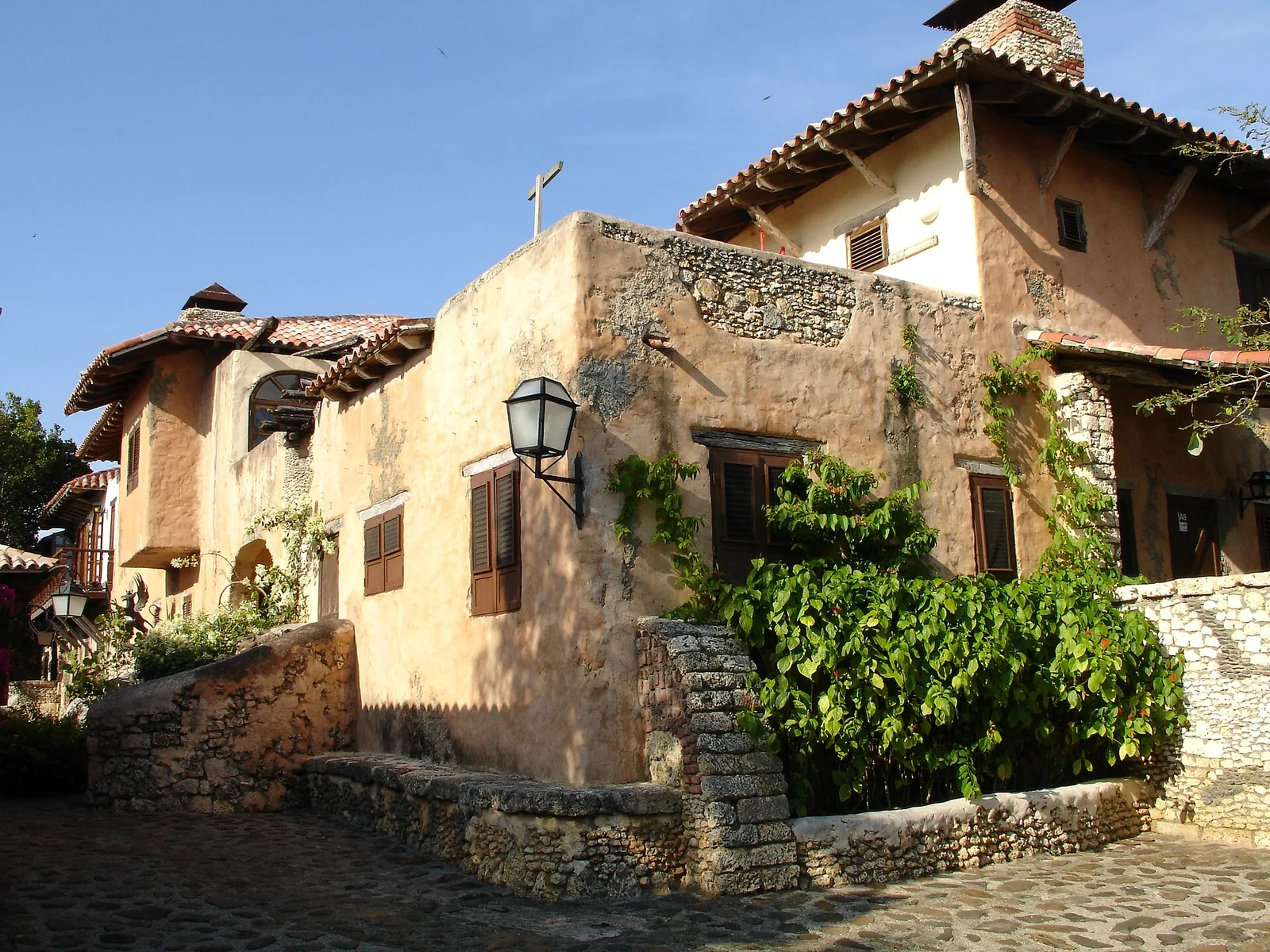
Altos de Chavón, near La Romana and about 124 km from the Malecón, is a village of stone streets modeled on a 16th-century Mediterranean village. It sits 300 feet above the Chavón River, and its views over the river make it a favorite photo stop on any trip to La Romana.
The village
The village took six years to build and opened in 1982 with a concert by Frank Sinatra. Its Grecian-style amphitheater seats 5,000 and has hosted many international artists since. At the center is St. Stanislaus Church, a popular place for weddings, with views over the river. The Dye Fore golf course runs along the east side of the village, so golfers often pair a round with the visit.
The archaeological museum
The Regional Archaeological Museum of Altos de Chavón opened in 1981. It holds more than 3,000 pre-Columbian objects, including one of the country's largest collections of Taíno art, and offers guided tours in Spanish and English. If you have already seen the rock art at the Cueva de las Maravillas, the museum fills in the story of the people who made it.
Visiting Altos de Chavón
Visitors who are not staying at Casa de Campo pay an entrance fee, or you can book a tour of the village. Check the current visiting arrangements before you set out.
The drive east follows the same highways as the trip to Saona: the Autopista Las Américas out of the city and the Autovía del Este past San Pedro de Macorís and La Romana. With an early start you can visit the cave in the morning, Altos de Chavón at midday, and still be back on the Malecón for dinner, though the day is more relaxed with one stop fewer.
Bayahíbe and Saona Island
Bayahíbe is the village on the southeast coast where most boats to Saona Island leave, about 135 km from the Malecón by the Autopista Las Américas and the Autovía del Este. It is 20 minutes from La Romana, so you can combine it with Altos de Chavón on a two-day trip.
Saona Island
Saona Island lies 19 km off the coast, covers 110 square kilometers and is part of Cotubanamá National Park. Its beaches are long stretches of white sand lined with coconut trees, Mano Juan is the only village, and it is the country's most important nesting site for sea turtles. Boats usually stop at Palmilla, a shallow sandbank with a wide natural pool, for a swim on the way.
Booking from Santo Domingo
A tour is the simplest way to see Saona from the capital. One private speedboat trip, for example, picks you up at your hotel in Santo Domingo, drives to the Bayahíbe dock, stops for 45 minutes at El Toro beach, breaks for lunch at Mano Juan and swims for 45 minutes at the natural pools, and brings you back about 11 hours after pickup. Meals and the park admission are paid separately on that tour. Bring a towel, a change of clothes and a waterproof bag.
More around Bayahíbe
Playa Dominicus, next to Bayahíbe, holds a Blue Flag. Boats also go to Catalina Island for snorkeling and diving. Cotubanamá National Park has walking trails, caves and cenotes, among them Padre Nuestro, a freshwater cenote. December to April is the high season on this coast.
The Baní dunes and Las Salinas
West of the city, the Monumento Natural Dunas de Las Calderas, known as the Baní dunes, is the largest dune system in the Caribbean islands. The dunes cover 20 square kilometers on the Las Calderas peninsula and rise as high as 35 meters, with views of Las Calderas Bay from the top. The Ministry of Environment runs the site with guides and a surveillance center, and a 1.5 km trail, the Santanilla trail, crosses the area.
Visiting the dunes
The dunes are protected, and park rangers, the Navy and the environmental protection service patrol them, including the roads to El Derrumbao beach. Nearly 13,000 people visited in 2024. Bring water, light clothes, a hat, sunscreen and repellent. A four-hour sandboarding and salt-flats tour from Santo Domingo includes hotel pickup, the boards and an English-speaking guide.
Las Salinas and the bay
Past the dunes, the Salado del Muerto lagoon at the western end of the peninsula has been used for salt production by evaporation, and mangroves ring it. The bay is an Important Bird Area where 124 bird species have been recorded, and El Derrumbao is popular for snorkeling because the reef comes close to the shore. Our Baní and Boca Canasta guide covers the dunes, the salt flats, the mangoes and the sweets of Baní in full.
Jarabacoa
Jarabacoa is a mountain town about 2 hours from Santo Domingo and about 146 km by road. Its mild mountain climate, with temperatures from 16 to 25 °C (61 to 77 °F), is a change from the coast.
The main sights are waterfalls and rivers. Salto de Jimenoa I and II are the town's best-known falls, and Salto Baiguate is a good one for a swim. Rafting and tubing on the Yaque del Norte River is the main adventure, and La Confluencia is the spot where the Yaque del Norte and Jimenoa rivers meet. Beyond the water, there is hiking in Armando Bermúdez National Park, birdwatching at the Ébano Verde Scientific Reserve, horseback riding and paragliding. The recommended stay is two to three days, so if you go, consider a night or two in the mountains rather than a same-day return. Summer and Easter Week are the busiest times in town.
Whale watching in Samaná
Each winter, humpback whales return to Samaná Bay on the northeast coast. The whale-watching season is regulated by the Ministry of Environment: in 2026 it opened in mid-January, with 46 whale-watching authorizations for Samaná Bay and the Bancos de La Plata y de La Navidad Marine Mammal Sanctuary, which officials describe as the largest protected area in the Caribbean.
Samaná is about 170 km from the Malecón, so a whale trip from the capital is a very long day; book a tour that handles the drive, or stay a night in Samaná. If you are visiting once the season opens in January, consider a two-day trip so that you are on the water early.
Day trips for a hot or rainy afternoon
Some of these trips work well when the sun is fierce or a shower rolls through. The Cueva de las Maravillas stays around 19 °C inside all year. Los Tres Ojos is a shaded cavern with cool water. The archaeological museum at Altos de Chavón and its Taíno collection make an indoor stop on the way east. In the city, the botanical garden's trees give shade on a sunny morning.
Lunch in Baní
A day west is also a day for food. Baní is known as the capital of the mango, and in early June the town holds Expo Mango, its mango harvest festival, with tastings, cooking contests and music. Paya, on the edge of Baní, is where many varieties of Dominican sweets are made, from dulce de leche to coconut and cashew-fruit sweets, so stop for a box of dulces on the way home.
Day trips with children
The steps down into the cavern and the barge across the last lake make Los Tres Ojos a good first outing with children. The botanical garden has room to run, and a morning there pairs well with lunch back in the city. Boca Chica's shallow, reef-protected bay is the easiest beach for small swimmers. For older children, the Cueva de las Maravillas, with its lighting, ramps and Taíno paintings, makes history easy to picture. Keep the longer drives, such as Saona or Samaná, for children who travel well.
Before you set out
A few habits make every trip smoother. Confirm the opening hours the day before, since parks and museums change their schedules for holidays and maintenance. Charge your phone and download an offline map, and save the address of where you are going in Spanish for your driver. For boat trips and dives, bring identification and any certification cards.
Combining trips
Several of these trips fit together well:
- Los Tres Ojos and the Faro a Colón make an easy half-day, since both are in Santo Domingo Este.
- The botanical garden in the morning and the Colonial Zone in the afternoon keep you in the city, with a long lunch in between.
- La Caleta and Boca Chica make one full day of diving and beach.
- The Cueva de las Maravillas and Juan Dolio make a day of cave and sea.
- Altos de Chavón and Bayahíbe make a two-day trip, with Saona on the second morning.
- The Baní dunes, Las Salinas and lunch in Baní make a full day west.
Day trips by season
Some of these trips are best at certain times of year. December to April is the drier high season in Bayahíbe and on Saona. The humpback whales are in Samaná Bay from January. The orchid show at the botanical garden is in early March. Baseball fans can catch an Estrellas game in San Pedro between October and December, and mango lovers can time a trip to Baní for Expo Mango in early June. Our guide to the best time to visit Santo Domingo goes through the year month by month.
A sample week of day trips
For a week in the city, here is one plan that mixes short and long days. Start with Los Tres Ojos and the Faro a Colón on your first afternoon. Spend a morning at the botanical garden. Give a full day to Boca Chica and La Caleta. Drive east one day for the Cueva de las Maravillas and Altos de Chavón. Book Saona from Bayahíbe for another. Head west to the Baní dunes and Las Salinas, and keep one day free for the city, the Colonial Zone and the Malecón.
At the end of each day you come back to the sea air and the lights along the water, and it is easy to plan the next morning's trip from there.
Find your apartment on the Malecón and plan your days out from the water's edge.